
Copenhagen
Copenhagen is a historic harbour city with museums and swimming spots in its inner harbour. People visit for its history, culture and opportunities to swim or enjoy the beach.
- lively nights
- festive
- foodie
Photo: Pudelek · CC BY-SA 4.0




 CopenhagenSæby
A circular driving route around Denmark, linking major cities and attractions across its islands and Jutland.
 Denmark
Copenhagen is a historic harbour city with museums and swimming spots in its inner harbour. People visit for its history, culture and opportunities to swim or enjoy the beach.
Photo: Pudelek · CC BY-SA 4.0
30 km to Roskilde as the crow flies

Roskilde has a small city centre with a pedestrian street and a cathedral. People visit for its historic landmarks and museums, and for the Roskilde Festival, which draws visitors from around the world.
Photo: Mariusz Paździora · CC BY-SA 3.0
Train to Køge · about 23 min · at least 34 a dayFrom a published timetable
Bus to Køge · about 51 min · at least 10 a week (Sat, Sun)From a published timetable

Wikivoyage has a travel guide for Køge. Køge is a Danish seaport on the coast of Køge Bugt (Bay of Køge) 39 km southwest of Copenhagen. It is the principal town and seat of Køge Municipality, Region Zealand, Denmark. From Wikipedia
Photo: Hubertus45 · CC BY-SA 3.0
30 km to Stevns Cliff as the crow flies
20 km to Faxe as the crow flies

Faxe or Fakse is a town on the island of Zealand in eastern Denmark. It is located in Faxe Municipality in Region Zealand. The town is most known for the Faxe Brewery, Royal Unibrew, a relatively large brewery producing a range of beer and soft drinks, soda, energy drinks, Faxe Kondi and many more. From Wikipedia
Photo: Hubertus · CC BY-SA 2.5
Bus to Haslev · about 22 min · at least 14 a day except SunFrom a published timetable

Haslev is a railway town in the southern part of the island of Zealand, Denmark, located about 60 km (37 mi) southwest of Copenhagen. It has a population of 12,894 (1 January 2026), and is the largest town and municipal seat of Faxe Municipality in Region Zealand. From Wikipedia
Photo: Hubertus45 · CC BY-SA 3.0
Train to Næstved · about 11 min · at least 34 a dayFrom a published timetable
Bus to Næstved · about 27 minFrom a published timetable

Næstved is a town in the municipality of the same name, located in the southern part of the island of Zealand in Denmark. Næstved has several adult education centers, five elementary schools - and has at least one of each type of the four upper-second-level education centers. The city has the largest high school in Denmark, Næstved Gymnasium & HF. From Wikipedia
Photo: Toxophilus · CC BY-SA 4.0
Bus to Præstø · about 31 min · at least 34 a dayFrom a published timetable

Præstø is a town with a population of 4,028 (1 January 2026) in Vordingborg Municipality in Region Sjælland on the east coast of the island of Zealand (Sjælland). The islands of Maderne, Storeholm, and Lilleholm are part of the Præstø Fjord da wildlife reserves (Præstø Fjord Vildtreservat). From Wikipedia
Photo: Hubertus · CC BY-SA 3.0
20 km to Bogø as the crow flies
3 km to Stubbekøbing as the crow flies

Stubbekøbing is a town with a population of 2,204 (1 January 2026) in Guldborgsund municipality in Region Sjælland on the northeastern coast of the island of Falster in south Denmark. Ferry service connects the town of Stubbekøbing over the Grønsund to Bogø at the town of Nyby. From Wikipedia
Photo: Bobby · Public domain
Bus to Nykøbing Falster · about 24 min · at least 33 a dayFrom a published timetable

Nykøbing Falster is a town on the island of Falster in southern Denmark. It has a population of 16,656 (1 January 2026). Including the satellite town Sundby on the Lolland side, with a population of 3,236, the total population is 19,892. From Wikipedia
Photo: Sandpiper · Public domain
Bus to Nysted · about 29 min · at least 25 a dayFrom a published timetable

Nysted is a town in Guldborgsund Municipality in Region Zealand on the southeastern coast of the island of Lolland in south Denmark. Nysted is located on the southern coast of Lolland, and has a population of 1,237 (1 January 2026). From Wikipedia
Photo: Erik Damskier · Public domain
20 km to Maribo as the crow flies

Maribo is a borough and the seat of Lolland Municipality, with a history dating back to the 15th century. Visitors can see its cathedral and convent ruin, explore the open-air museum, or take the museum train.
Photo: Hubertus45 · CC BY-SA 3.0
50 km to Spodsbjerg as the crow flies

Spodsbjerg is a village in south Denmark, located in Langeland Municipality on the island of Langeland in Region of Southern Denmark. From Wikipedia
Photo: Nils Jepsen / Nico-dk · CC BY-SA 3.0
7 km to Rudkøbing as the crow flies
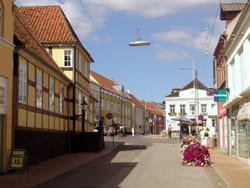
Rudkøbing is a town in Denmark, on the western coast of the island of Langeland. It is the seat of Langeland Municipality, in the Southern Denmark Region. The town is located 15 kilometres (9.3 mi) southeast of Svendborg and is connected to Siø through the Siøsund Bridge. From Wikipedia
Photo: MOdmate at de.wikipedia · CC BY-SA 3.0
20 km to Marstal as the crow flies

Marstal is a town in southern Denmark, located in Ærø Municipality on the island of Ærø. Marstal has a population of 1,989 (1 January 2026) and is the largest town on Ærø. It was the municipal seat of the now abolished Marstal Municipality. From Wikipedia
Photo via Wikimedia Commons · CC BY-SA 3.0
20 km to Søby as the crow flies

Søby is a port town at the northernmost tip of the southern Danish island of Ærø, 15 km from Ærøskøbing and 23 km from Marstal. Like the rest of the island, it is politically part of Ærø Municipality. Søby has an active shipyard, fishing industry and business port. From Wikipedia
Photo: Erik Christensen · CC BY-SA 3.0
20 km to Fynshav as the crow flies

Fynshav is a small coastal town and ferry port, with a population of 793 (1 January 2026), in Sønderborg Municipality, Region of Southern Denmark in Denmark. Fynshav is located on the east coast of the island of Als 17 km northeast of Sønderborg. Fynshav has ferry connections to Bøjden on the island Funen and to Søby on the island of Ærø. From Wikipedia
Photo: Nis Hoff · Public domain
40 km to Svendborg as the crow flies

Svendborg is located by Svendborg Sound and is a starting point for exploring the Sydfynske Øhav archipelago. People go for the islands, short cruises, and attractions such as Naturama and Danish Welfaremuseum.
Photo: Erik Christensen · CC BY-SA 3.0
Bus to Faaborg · about 30 min · at least 54 a dayFrom a published timetable

Faaborg has a historic centre of cobbled streets and old town houses around its clock tower, with shops, restaurants and cafés near the harbour. People come to swim, enjoy the lively summer harbour and explore nearby hills and walking routes.
Photo: Linus Folke Jensen · CC0
9 km to Bøjden as the crow flies
30 km to Sønderborg as the crow flies

Sønderborg is a centre for trade, tourism, industry, and education. People visit its sights and can enjoy music and walking.
Photo: Dguendel · CC BY 3.0
Train to Gråsten · about 12 min · at least 10 a dayFrom a published timetable
Bus to Gråsten · about 23 min · at least 49 a dayFrom a published timetable

Gråsten is a town with a population of 4,291 (1 January 2026) on the east coast of the Jutland peninsula in south Denmark by the Nybøl Nor at an inlet of the Flensburg Fjord. It belongs to the Sønderborg municipality in Region of Southern Denmark. The town is located almost exactly at the center of a triangle defined by the towns of Aabenraa, Flensburg and Sønderborg Castle (Sønderborg Slot). From Wikipedia
Photo: Arne List · CC BY-SA 3.0
Bus to Kruså · about 23 min · at least 16 a dayFrom a published timetable

Kruså is a Danish border town and border crossing with a population of 1,528 (1 January 2026), 6 kilometers north of Flensburg, situated on the European route E45. It is located in Aabenraa Municipality (prior to the Municipality Reform of 2007 in Bov municipality). On 9 April 1940, at 4:15 am German troops crossed the border here, starting the invasion of Denmark. From Wikipedia
Photo: Sönke Rahn · CC BY-SA 3.0
40 km to Tønder as the crow flies

Tønder is a town in the Region of Southern Denmark. With a population of 7,481 (as of 1 January 2026), it is the main town and the administrative seat of the Tønder Municipality. From Wikipedia
Photo: Hjart · CC BY-SA 4.0
10 km to Højer as the crow flies

Højer has old houses and farms from the 18th and 19th centuries. People visit its historic sights and the nearby marshes, where summer boat trips offer seal watching.
Photo: Hjart · CC BY-SA 4.0
40 km to Ribe as the crow flies

Ribe is centred on the Ribe River, and its old town stands on three islands. People visit its historic sights, including the cathedral, and attractions such as Ribe VikingeCenter.
Photo: Hjart · CC BY-SA 4.0
Train to Esbjerg · about 27 min · at least 34 a dayFrom a published timetable
Bus to Esbjerg · about 43 min · at least 6 a day, Mon–FriFrom a published timetable

Esbjerg is a harbour city shaped by offshore industry, transport, energy and commercial fishing. People visit for its cultural attractions, places to eat and bars and clubs in the city centre.
Photo: Cnyborg · CC BY-SA 3.0
60 km to Hvide Sande as the crow flies

Hvide Sande is a small town in the middle of the Holmsland Dunes and placed around the artificial canal which connects Ringkøbing Fjord to the North Sea, in the western part of Central Denmark Region, formerly (until 1 January 2007) Ringkjøbing County, Denmark. The town has a population of 2,762 (1 January 2026) and is the fifth largest fishing port in Denmark. From Wikipedia
Photo: Rüdiger Wölk · CC BY-SA 2.5
Bus to Ringkøbing · about 26 min · at least 22 a dayFrom a published timetable

Ringkøbing is a town in Ringkøbing-Skjern Municipality in Region Midtjylland on the west coast of the Jutland peninsula in western Denmark. It has a population of 9,802 (1 January 2026). From Wikipedia
Photo: Vanderven · CC BY-SA 2.5
50 km to Lemvig as the crow flies

Lemvig is a market town on the Limfjord in North Jutland, Denmark. The town has a population of 6,750 (2026), and is the seat of Lemvig Municipality in the Central Denmark Region. Lemvig lies between the Limfjord and Lemvig Lake, and is nestled between hills to the east and west. From Wikipedia
Photo: Anigif at da.wikipedia · CC BY 3.0
50 km to Thisted as the crow flies

Thisted has a park, a lighthouse, a museum and other sights. People can visit Thy National Park and try beers from the town’s independent regional brewery.
Photo: Hjart · CC BY-SA 4.0
Bus to Hanstholm · about 30 min · at least 24 a dayFrom a published timetable

Hanstholm is a maritime town centered on its fisheries industry. People come for fish auctions, fishing trips, windsurfing and kite surfing, and diving on nearby wrecks.
Photo: Erik Christensen · CC BY-SA 3.0
40 km to Fjerritslev as the crow flies

Fjerritslev is a small town in Han Herred, where sparse population means there is not much going on. People come to the region for its coastal landscapes and beaches, and Fjerritslev is one of the towns where they can stock up on groceries and basic necessities.
Photo: © 2011 by Tomasz Sienicki tsca · CC BY 3.0
70 km to Hirtshals as the crow flies

Hirtshals is a starting point for the Hærvejen hike, which runs down the Jutland peninsula. Visitors can hike the full 500 km route or choose shorter sections to experience nature and cultural variety.
Photo: DXR / Daniel Vorndran · CC BY-SA 4.0
40 km to Frederikshavn as the crow flies

Frederikshavn describes itself as the northernmost municipality on the European continent. People go for its sights and activities, and it is a starting point for the Hærvejen hike.
Photo: © 2005 by Tomasz Sienicki tsca · CC BY 2.5
Bus to Sæby · about 9 min · at least 49 a dayFrom a published timetable

Sæby is a town and seaport located on the east coast of the historical region of Vendsyssel on the North Jutlandic Island in northern Denmark. The town is located in Frederikshavn municipality in Region Nordjylland. It has a population of 9,012 (1 January 2026). From Wikipedia
Photo: jkob · CC0
Also on this route, not placed on the map: Kirke Hvalsø, Stege, Tranekær.
Departures are lower bounds: the timetables we hold do not cover every operator. Check times before you travel.
Safar plans routes like the Marguerite Route: which stops to keep, the order, how long to stay and how to get between them.
Paste this code into your site to show this map, with a link to Safar under it.